


The Netflix Effect on African stories and why it feels personal

What if the future of African storytelling doesn’t begin with picking up a book but with pressing play?
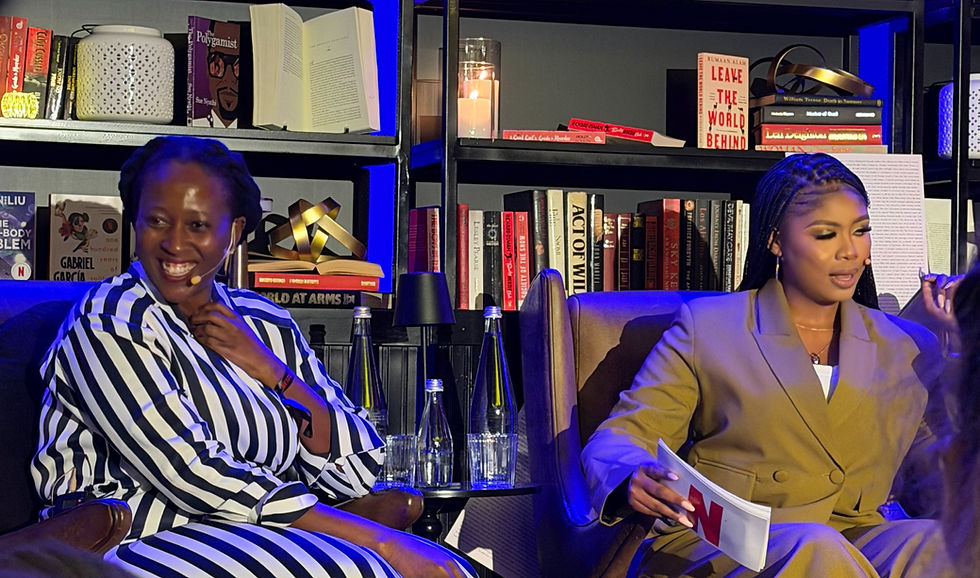
This week, Lucky No8 Concepts invited me to Netflix South Africa’s Beyond the Book event, an intimate, candid industry conversation exploring the “Netflix Effect.”

At its core, the Netflix Effect speaks to how book-to-screen adaptations are a driver towards growing the global economy whilst supporting the creative industry. The book adaptations are not only driving discovery but also deepen cultural impact and open new doors of opportunity for local creators and the publishing ecosystem.
But for me, the conversation went far beyond industry trends. It became something deeply personal anchored in dreams, possibilities and what it means to truly see the future unfolding in front of you. What felt like a distant dream for many authors, including my own daughter, suddenly felt closer than ever before.
The ‘Netflix Effect’ is not just changing what we watch, it’s reshaping how African stories are discovered, experienced and remembered.
Most of you who follow my journey will know that my daughter is a published author. For as long as I can remember, her dream hasn’t just been to write books but to see her stories on Netflix. To watch characters she created come to life on screen.
When she first shared that dream with me, I believed in it because I knew that it was possible. But if I’m being honest, I wasn’t always certain about its probability, especially within the context of African storytelling, access and opportunity. Add self-published to that list…
A group of women sitting on a stage with Netflix on a TV screen A lady wearing a green suit and black camisole Two ladies sitting on stage, smiling Two ladies sitting on stage, having a conversation A Wireframed Netflix object
And yet, sitting in that room, listening to conversations about real African authors whose work has been adapted for Netflix, I felt something shift. Suddenly, this dream didn’t feel distant anymore, it felt visible and attainable.
What once felt possible but distant suddenly became visible and that changes everything.
When a story moves from page to screen it reaches people who may never have encountered it otherwise. In South Africa, where reading statistics remain low and access to books is still uneven, this shift matters more than we often acknowledge. We know that not everyone grows up surrounded by books. Not everyone sees reading modelled or encouraged. Don’t get me started about the exorbitant cost of books which make them inaccessible, even to the working class.
So many people press play because most households have televisions and devices to stream services from. When people press play, a story that may have remained on a shelf begins to live - visibly, audibly and emotionally - in many homes across the country.
That is the true power of adaptation. It is not just about entertainment but about access.
The African narrative, reclaimed and reimagined
The event served as a celebration of Netflix’s recently launched, Watch Your Favourite Books Collection. Just days after celebrating Africa Day and with a new upcoming series, The Polygamist adapted from a novel by Sue Nyathi, the timing of this gathering was perfect. Hearing directly from those involved in shaping and experiencing this new world of possibilities made the conversation even richer.
Nozizwe Jele, author of Happiness is a Four Letter Word (if you haven’t Netflixed it, go binge on it this weekend!), shared her own journey through the adaptation process. She highlighted how the process has expanded her interest in storytelling through motion pictures. Her reflection spoke to something important: these opportunities are not just about visibility but about growth as well.
They allow authors to stretch their creativity, develop new skills and explore storytelling in entirely new ways. These opportunities bring authors closer to the possibility of fully dedicating themselves to their craft, thus living a more fulfilled life.
This shift is not just about visibility, it’s about expanding what’s possible for African creatives.
Understanding the ‘Why’ behind adaptations

What also stayed with me was Netflix’s Wanda Sondiyazi’s reflection on what makes a story “adaptable.” Echoing the panelists' sentiments, she shared that Netflix often sees itself as the “first audience”. They get drawn to stories that offer compelling characters, emotionally resonant journeys and worlds that feel both authentic and relatable.
Even more powerful was her perspective on adaptation as a delicate balance between preservation and transformation. She said that in bringing a book to life on screen, you are not simply retelling it, you are reinterpreting it, while protecting its essence. It was a reminder that behind every adaptation is a thoughtful, intentional process that honours the writer’s voice while opening the story up to entirely new audiences.
The ripple effect: from screen back to page
One of the most encouraging insights from the discussion was the impact of adaptations on book sales. Globally, stories adapted for screen have driven significant spikes in readership and locally, that momentum is beginning to build.
When a viewer watches a series, they become invested, curious and connected. Eventually, they seek out the book. In essence the screen introduces, books deepen and stories expand. This is not competition but a powerful cycle of discovery.
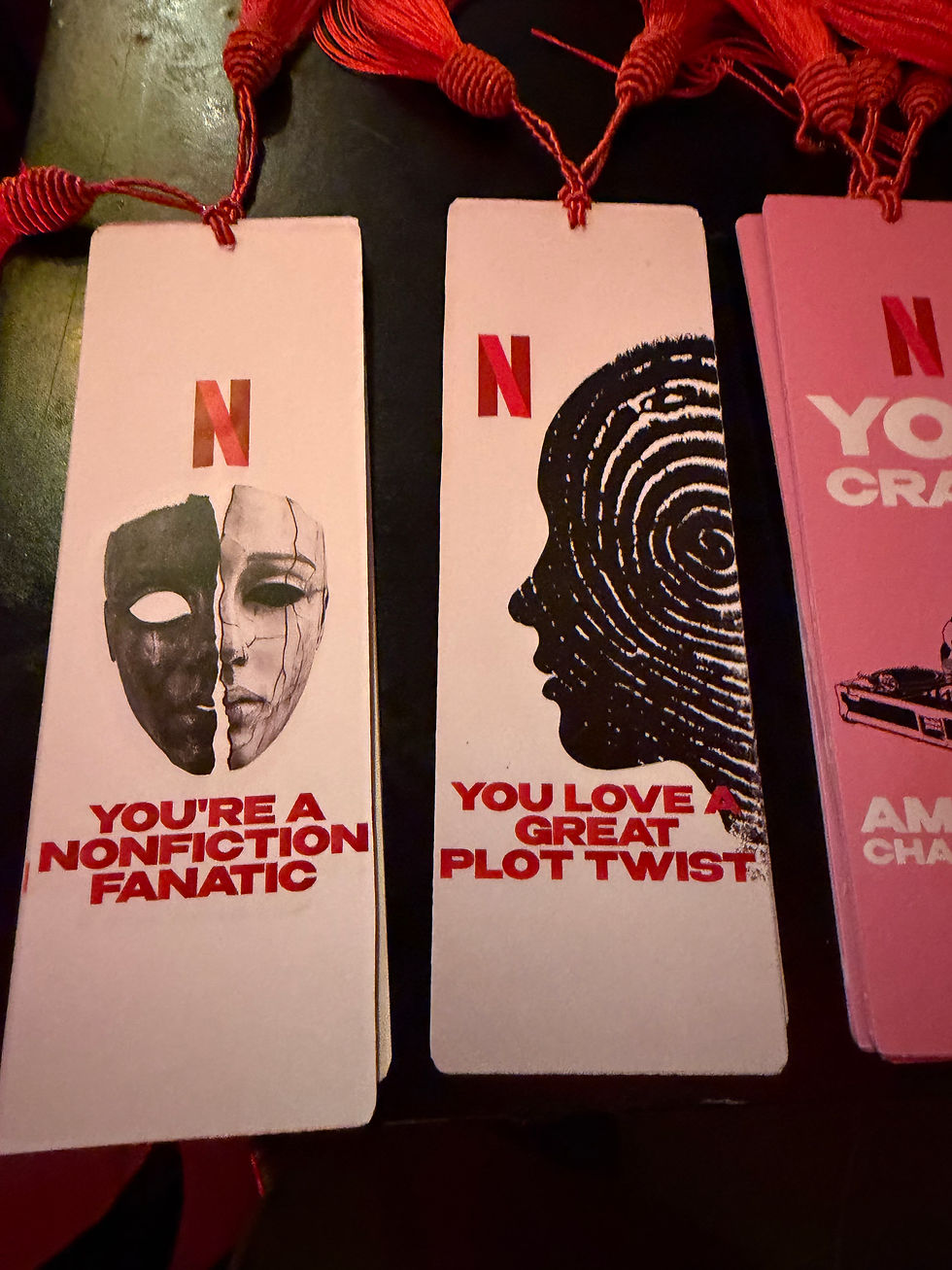
At the end of the event, we received signed copies of The Polygamist by Sue Nyathi.

A beautiful and symbolic gesture which reminded me that behind every successful adaptation is an author. A story that began quietly long before production teams and global audiences.
This gesture also reflected Netflix’s commitment to literacy, authorship and amplifying African voices beyond storytelling. In a country where cultivating a reading culture still requires nurturing and effort, this matters deeply.
Why this moment matters
We are witnessing an increase in African stories being actively invested in, adapted and shared with the world. What excites me most is not just the stories we are seeing now but the ones that will come because of these transformations.
The young writers including my own daughter are watching and will be inspired to create more. In parallel, authors are gaining confidence whilst discovering new pathways.
This experience will stay with me for a long time to serve as a reminder that stories are not just things we consume but things that shape belief. Belief in possibility, in representation and in ourselves.
When people see themselves in stories, they don’t just watch, they begin to believe.
And maybe that is the real “Netflix Effect.” Not just what it does for content but what it does for confidence. Because when a young African author sees someone like Sue Nyathi’s work adapted for a global platform, the dream transitions from “maybe” to “why not me?”
We often ask how we can get more people to read but maybe the better question is: how do we make stories impossible to ignore, no matter the format? Because when people see themselves reflected in stories, they don’t just watch, they connect, imagine and create.
And sometimes… they begin with a dream that even their parents aren’t quite sure is possible. Until one day when it is.
While I wait for The Polygamist’s Netflix premiere on 12 June 2026, I am going to read my book to get acquainted with the original storyline.
I heard it’s quite a page-turner.
P.S. The premiere will be on a Friday so host a watch party and binge away… for now, watch the trailer here 😊.


What an interesting read. We have seen the power of adaptation with the recent trending Netflix story - The Polygamist, where the nation is talking about a story that was already in the book - people have seen the characters come to life, this is so exciting to see. In some comments, people are already talking about getting themselves the book after seeing characters on screen.
Indeed, your child's dream is not far - as an author too, she can one day see characters coming live on big screens. This shows how we are moving in the right direction.
I have it in my radar. I'm reading a book by the same Author now. I'm inspired to read the Polygamist seeing that the current "A Family Affair" is making my heart race with anticipation. African stories are REAL !
Couldn't agree more ! Watching a film/series from a book you've read OR reading a book then later see it visualised on screens is the most thrilling feeling ever. It brings about different emotions - amazement, excitement, critique, perspective, live drama, oh yhaa moments and so much more ....! The Netflix effect must continue and bring in more African Stories. We want to see them ! (But less pornography and extreme violence tuuuuuu). If Netflix can bring a feature similar to DSTV of muting strong launguage and clearly marking stories for different age groups, then we will Netflix all the way with our little ones!